
When you take an antibiotic, you are launching a targeted strike against bacteria. But microbes are survival machines. Over time, they have evolved strategies to resist our drugs, creating the global health challenge of antimicrobial resistance (AMR).
At the core, resistance comes in two forms: intrinsic (natural shields like impermeable cell walls) and acquired (mutations or gene uptake that allow survival under drug pressure). Where things get especially dangerous is when resistance spills over into multiple drug classes.
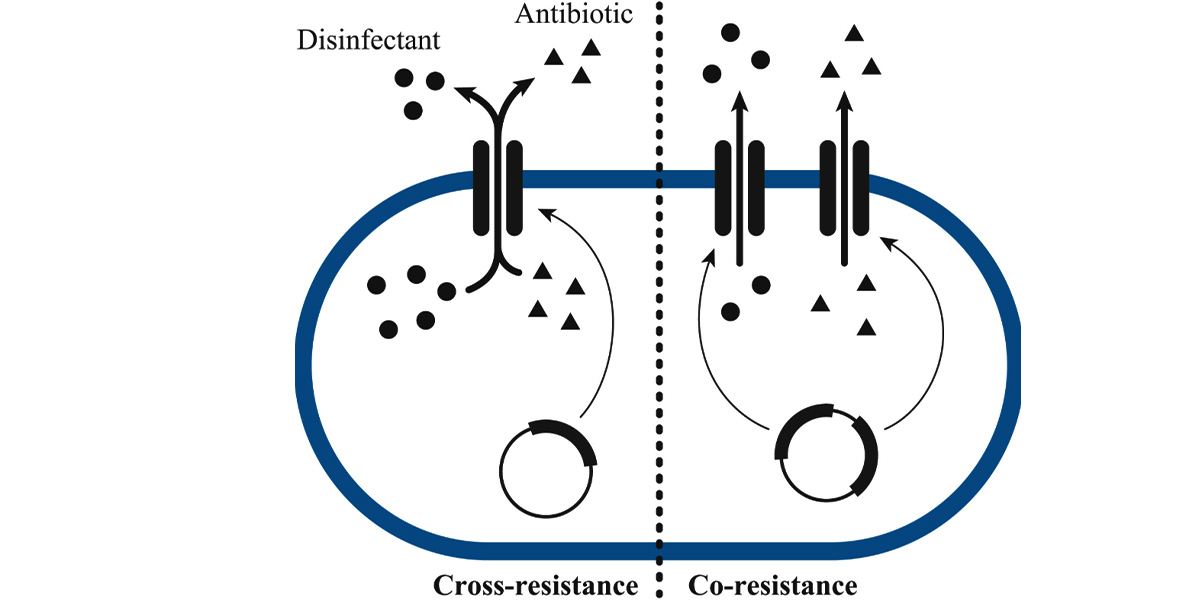
Cross-Resistance
Cross-resistance occurs when a single defense mechanism protects bacteria against different antibiotic classes that act on the same target or pathway. For example, a mutation in the ribosomal binding site can prevent several antibiotics that all disrupt protein synthesis (macrolides, lincosamides, and streptogramins) from attaching. In just one genetic tweak, many drug classes become neutralized.
Co-Resistance
Here, instead of one mutation blocking a family of drugs, bacteria stack multiple distinct resistance genes together. Plasmids (small DNA loops) often carry clusters of resistance genes. Through bacterial conjugation, these plasmids are transferred from one bacterium to another. The recipient instantly gains protection against several unrelated antibiotics, turning into a new donor that can spread resistance further.
Understanding whether a pathogen relies on cross-resistance or co-resistance is a practical guide for action. Cross-resistance warns us that shared biological targets are vulnerable, while co-resistance reveals how gene exchange networks accelerate multi-drug survival. Recognizing these patterns helps us anticipate resistance before it spreads.
Protecting antibiotics means understanding how bacteria fight back and staying one step ahead of their evolution.